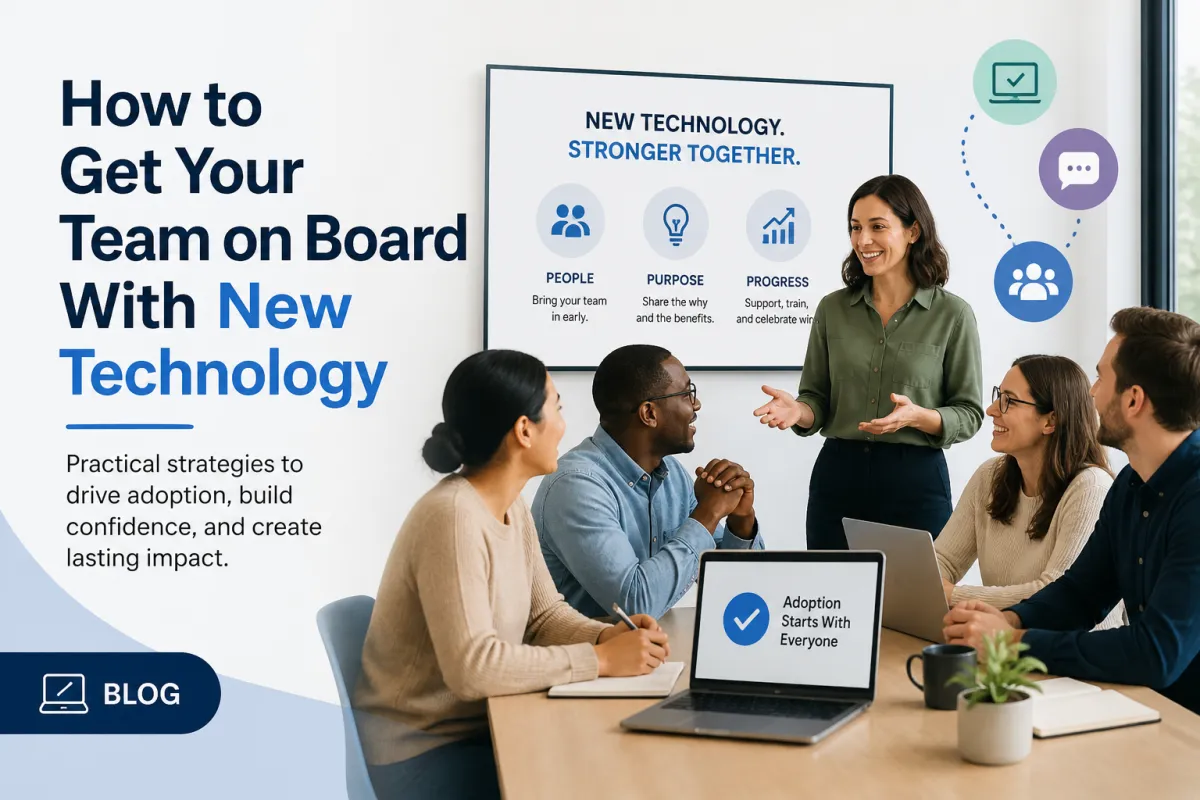
New How to Get Your Team on Board With New Technology Post
There's a version of this conversation happening in every industry: a leader wants to adopt a new tool, and half the room goes quiet. Not hostile — just unconvinced.
It's not laziness. It's a reasonable reaction to change. Most employees have been through at least one technology rollout that made their jobs harder, not easier. Of course they're skeptical.
Here's what actually helps.
Start with the fear, not the features
The most common mistake is leading with the product demo. Before anyone cares how the software works, they want to know if they're being replaced.
Be direct about it. If the tool is meant to automate part of someone's job, say so, and explain what that frees them up to do instead. Vague reassurances ("this will just make things more efficient!") tend to make things worse. Specifics are more convincing.
Kelly, who runs an auction business, put it plainly: a lot of her team thought technology would undermine the personal relationships that made their work valuable. She didn't argue with that instinct — she showed them where it was right and where it wasn't.
Give people a reason to try, not just a mandate
Training matters, but the goal isn't compliance. If you roll out a new system and then check a box called "training complete," you haven't done the hard part.
What actually changes behavior is when employees see early wins for themselves — not in a presentation, but in their own work. Pair training with real use cases from their day-to-day. When someone solves a problem faster with the new tool, make that visible. Let it spread naturally.
Celebrating early adopters is less about morale and more about social proof. It gives skeptics a peer to ask questions, instead of a manager to nod along to.
Use it yourself
If leadership treats new technology as something for the junior staff to figure out, the message lands. People notice when a tool is "required" but nobody above a certain level actually touches it.
Showing up to a meeting with the dashboard open, referencing data you pulled yourself, asking a genuine question about a feature — these things matter more than any rollout memo.
Let people weigh in before the decision is made
Technology adoption goes better when employees have a say in what gets adopted. That doesn't mean a committee that delays everything — it means early conversations with the people who will actually use the tools.
They'll catch problems you won't anticipate from the top. And they're more likely to work through friction if they helped choose the direction.
Make the case in terms that are actually relevant
"This is a strategic investment in our digital future" is not convincing. "This will cut the time you spend on invoices from two hours to twenty minutes" is.
Kelly's restaurant clients didn't care about SEO as a concept. They cared that it tripled their walk-in traffic by reaching people who'd never heard of them. That's the version worth telling.
The benefits have to connect to something specific. What problem does this solve? Whose Tuesday gets easier? If you can't answer that concretely, it's worth asking whether you've picked the right tool.
Technology adoption rarely fails because the software was bad. It fails because the people side of it was treated as an afterthought. Get that part right first.