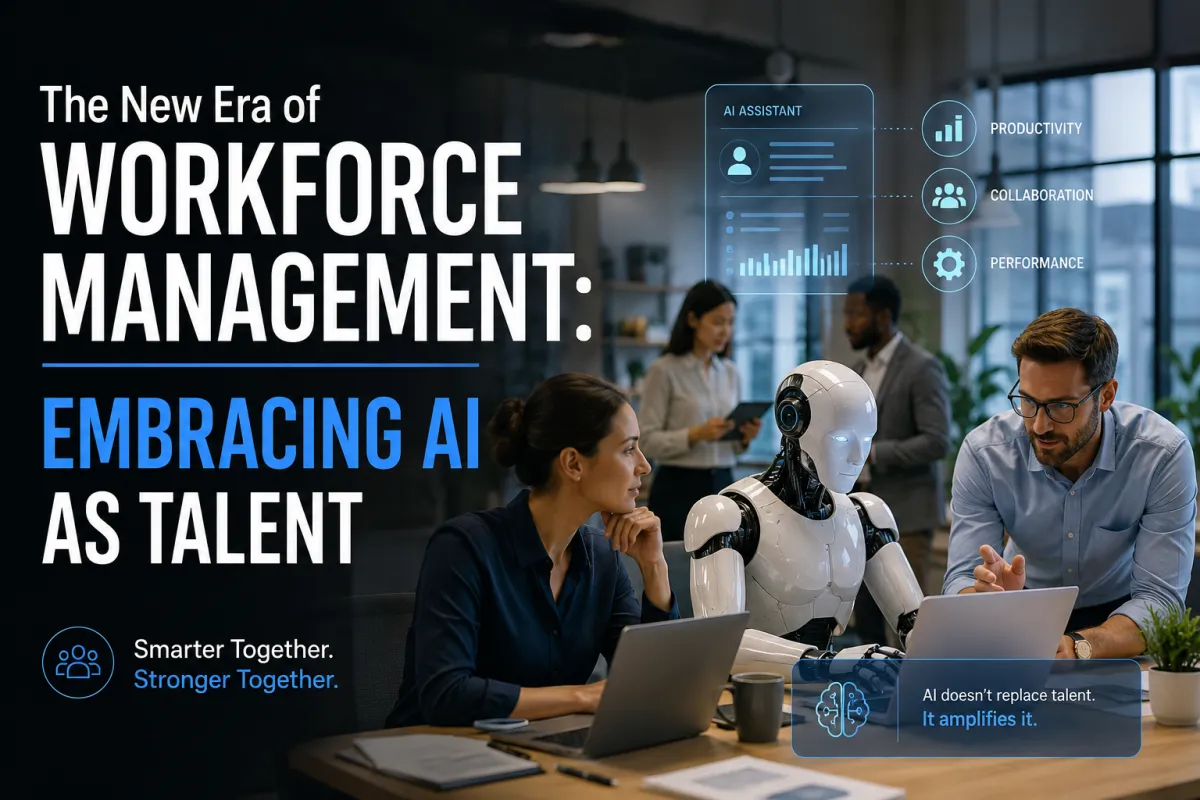
The New Era of Workforce Management: Embracing AI as Talent
In today’s rapidly evolving business landscape, the integration of artificial intelligence (AI) into the workforce is not just a trend—it's a necessity. Companies are navigating a complex journey of transforming their traditional approaches to workforce management, and understanding how to harness AI effectively is critical. In this blog post, we will explore insights from industry leaders Mike Sullivan and Vinay Gidwaney, who share their expertise on workforce intelligence and the future of talent management and lessons from their new book Workforce Intelligence: The People-First Playbook for Leading Your Company Through AI Transformation.
What is Workforce Intelligence?
Workforce intelligence is a concept that transcends traditional human capital management. It involves recognizing both human talent and artificial intelligence as integral components of the workforce. As organizations face an abundance of information and the need for informed decision-making, understanding how to manage both human and AI talent becomes paramount.
The Evolution of Workforce Management
In traditional settings, workforce management focused solely on human capital. However, as AI technologies advance, there's a growing need to redefine this framework. Companies like One Digital are at the forefront of this shift, emphasizing that AI should be viewed as an extension of talent.
AI as Talent
AI is not just a tool; it’s a new class of talent that must be managed effectively. This perspective allows businesses to leverage AI in ways that enhance human productivity rather than replace it.
The Challenge of Integrating AI
The integration of AI into the workforce presents both opportunities and challenges. As Mike Sullivan explains, organizations must engage in deep introspection about their existing practices and how they can evolve.
Navigating Change
Companies must transition from a focus on headcount to understanding the actual work that needs to be done. This shift means evaluating which tasks can be automated while ensuring that human skills are utilized where they are most effective.
Creating a New Framework
The development of a scoring mechanism to evaluate the combined performance of human and AI talent is essential. This framework will help organizations understand the effectiveness of their workforce strategies and make necessary adjustments.
The Role of Leadership in AI Transformation
Leading the Charge
Leadership plays a pivotal role in guiding organizations through AI transformations. Mike and Vinay stress the importance of leaders who can visualize the potential of AI in reshaping their businesses.
Visionary Leadership
Leaders must foster an environment where innovation is encouraged, and AI is seen as a partner in achieving business goals. This perspective enables organizations to adapt more readily to technological advancements.
- Human-Centric Approach
The human element cannot be overlooked. Leaders must remember that behind every data point, there are real people with lives and responsibilities. As organizations explore AI, the focus should remain on enhancing human potential rather than merely cutting costs.
Balancing AI and Human Intelligence
Achieving a balance between AI and human intelligence is crucial. Businesses need to understand the different types of skills that AI can handle versus those that require human intuition and emotional intelligence.
Defining Roles
Organizations should identify which tasks can be effectively executed by AI, such as data analysis and routine decision-making, while reserving tasks that require empathy, creativity, and complex problem-solving for humans.
Continuous Learning and Adaptation
As AI capabilities evolve, so too must the skills of the workforce. Companies must invest in continuous learning initiatives to ensure that employees can adapt to new roles and responsibilities as AI becomes more integrated into their workflows.
Embrace AI as Part of Your Talent Strategy
1. Rethink Workforce Management: Shift from a traditional view of human capital to one that includes AI as a critical component of the workforce.
2. Define Clear Roles: Establish which tasks are best suited for AI versus those that require human intervention.
3. Invest in Learning: Encourage ongoing education and training to help employees adapt to new technologies and workflows.
4. Prioritize Human Well-Being: Always consider the human impact of AI integrations and strive for a balance that enhances both productivity and employee satisfaction.
The journey towards integrating AI into the workforce is not just about technological advancement; it’s about redefining how we think about talent. By embracing AI as an integral part of workforce management, organizations can create a more efficient and empowered workforce. The future of work lies in the collaboration between human intelligence and artificial intelligence, and leaders must guide their teams through this transformative process with empathy and foresight.
---
Listen to the full Podcast:
Spotify: https://tinyurl.com/mpcazamy
Apple: https://tinyurl.com/mpmjxmkh
Amazon: https://tinyurl.com/2kukhw9z
Youtube: https://tinyurl.com/3xbfak8h