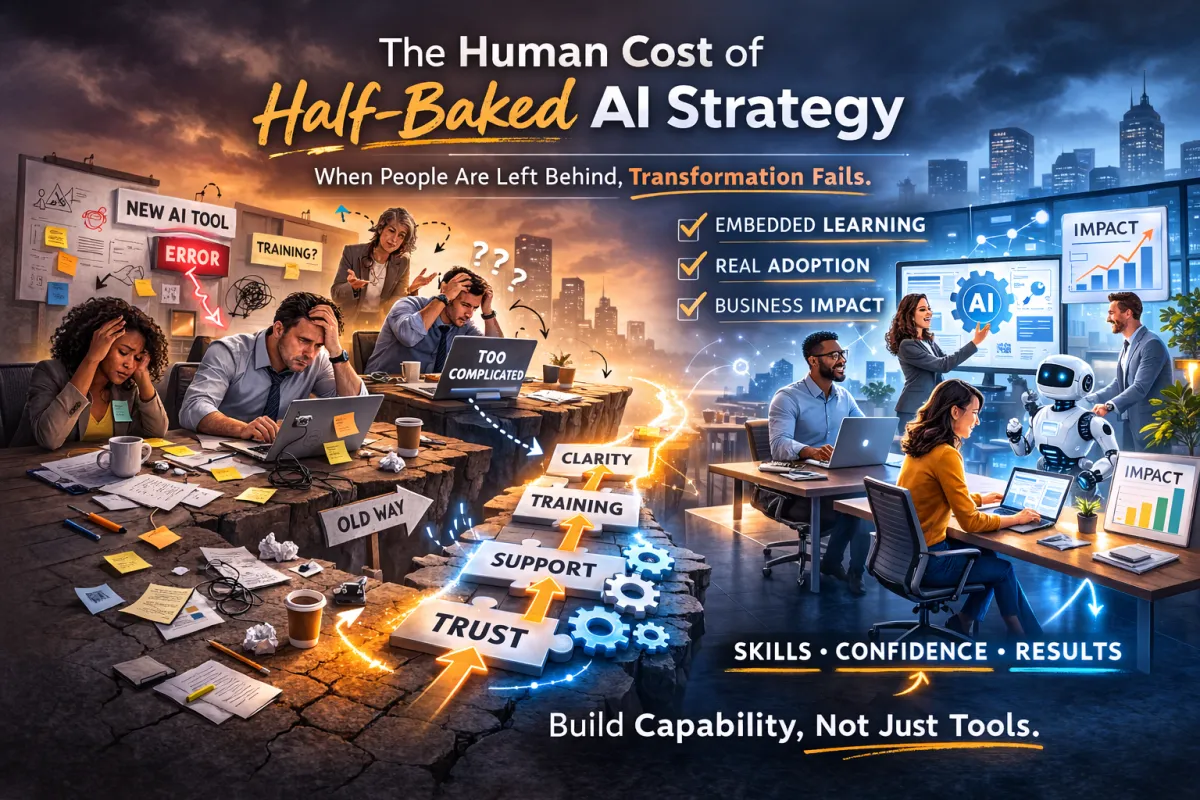
The Human Cost of Half-Baked AI Strategy
Let’s cut to it: most companies are rolling out AI like it’s a Costco sample: “Try this out and let us know how it goes.”
There’s a goal (often something like “become AI-native”), but no context. There’s a plan, but not everyone can articulate what it is.
Then leadership acts surprised when adoption tanks, teams stall, and people quietly go back to doing things the old way.
If this is you, you didn’t fail at AI. You just forgot the humans.
In our latest podcast episode, I sat down with Cam Brewer from KeyLearning to talk about what’s really going on inside companies trying to become “AI-powered.” The headline stat: only 49% of employees feel confident they have the skills to keep up.
That’s down 10% from last year. And before you say, “But we offer training,” keep in mind that while 44% of employers think they offer upskilling programs, only 33% of employees agree. That gap isn’t just a miscommunication. It’s a system failure.
Most companies are shipping tools and calling it transformation. They’re buying software and hoping it turns into strategy. They treat learning like a checkbox: some slides, a lunch-and-learn, maybe a webinar if they’re feeling fancy. Meanwhile, your team is staring at a new interface wondering, “Is this supposed to help me or replace me?”
This is where most execs go wrong: they treat learning like a one-off event instead of a built-in system. You can’t throw a six-month project at people and expect them to just “figure it out.”
That’s how you end up with talent debt. It’s just like tech debt, but more expensive (and way harder to unwind). You lose time. You lose trust. You lose your best people because they’re tired of pretending they’re not confused.
Cam talks about “embedded learning,” making skill-building part of the actual job, not some bonus homework assignment. I call it not leaving your people hanging. This means training in the flow of work. Microlearning, real feedback loops, clarity from leadership that AI isn’t optional, it’s part of the job now. That’s how you get adoption that sticks and value that shows up on the bottom line.
So here’s the deal: if you’re rolling out AI without a learning system, you’re not transforming. You’re simply transferring the problem downstream. You’re trading efficiency for burnout and calling it progress. And you’re going to pay for it later.
At SaaS Business Advisors, we’ve started embedding learning strategy into our advisory sprints. Because if your people don’t understand the tools, it doesn’t matter how shiny your AI roadmap looks.
If you’re seeing the signs (ghosted platforms, stalled rollouts, your best folks looking confused or heading for the exit) DM me. We’re opening a few early access spots for teams ready to stop winging it and start building capability on purpose.
This isn’t about adding more tools. It’s about building muscle. You ready or not?